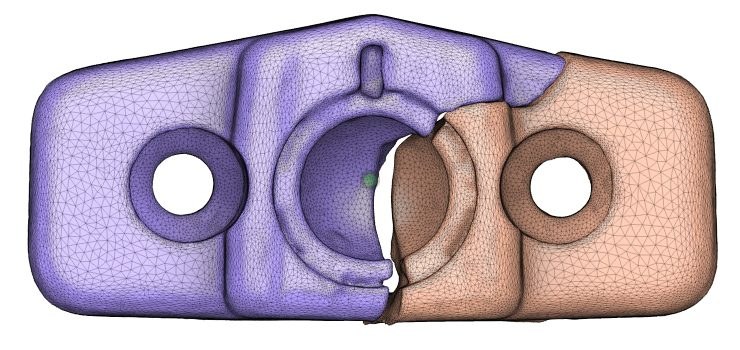
Scan and measure
We 3D-scanned every piece, then digitally straightened and realigned the broken halves. The intact cover became our master reference for size.

Case study · Lotus
From a broken, glued-together original to a precise, printable replacement for a part that hasn’t been made for decades.
It’s a small black plastic part that nobody notices until it fails. It holds the rear-view mirror inside a 1970s Lotus. This one had snapped in two, been glued back together, and given up again. New ones haven’t been available for years, and decent used ones are almost impossible to find. Without it, the mirror simply doesn’t stay put.
Copying the shape wasn’t enough. The replacement had to work with the car’s original pieces:
The only references were the damaged halves, distorted by the earlier repair, and the original cover.
We 3D-scanned every piece, then digitally straightened and realigned the broken halves. The intact cover became our master reference for size.
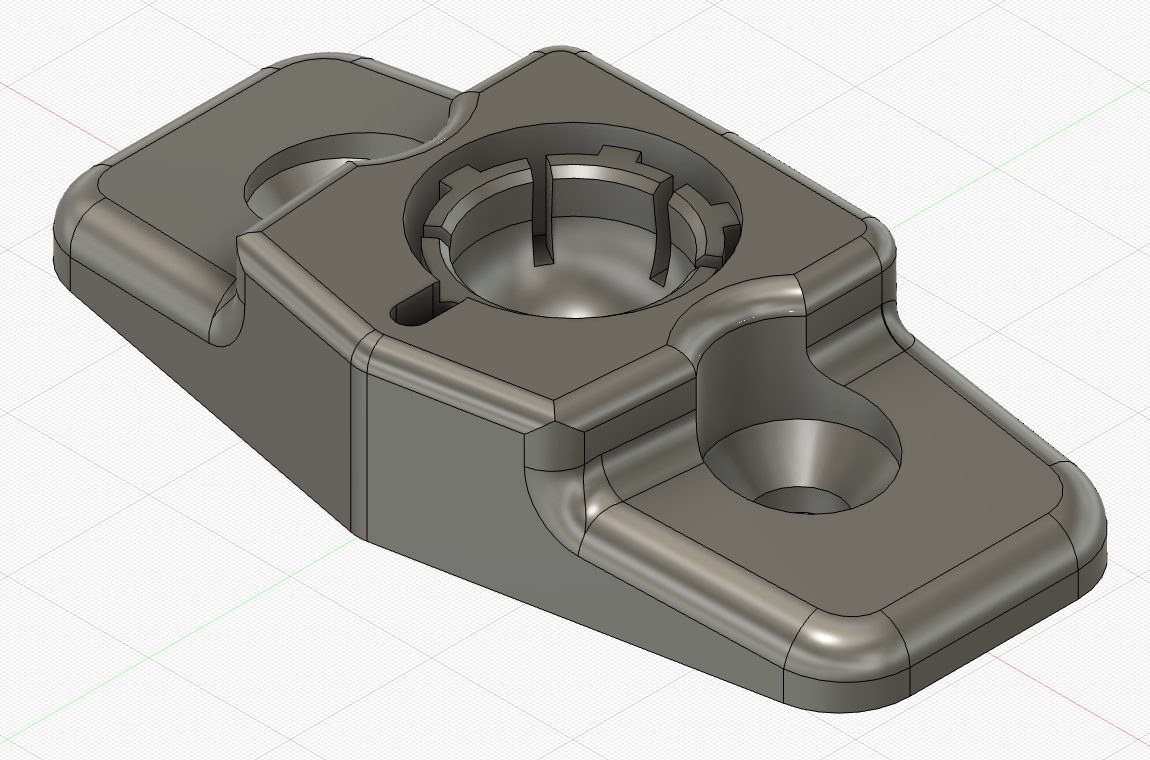
We modelled a clean new part from scratch in professional CAD. Key sizes such as the ball diameter, socket grip and hole spacing are adjustable, so changes take seconds.
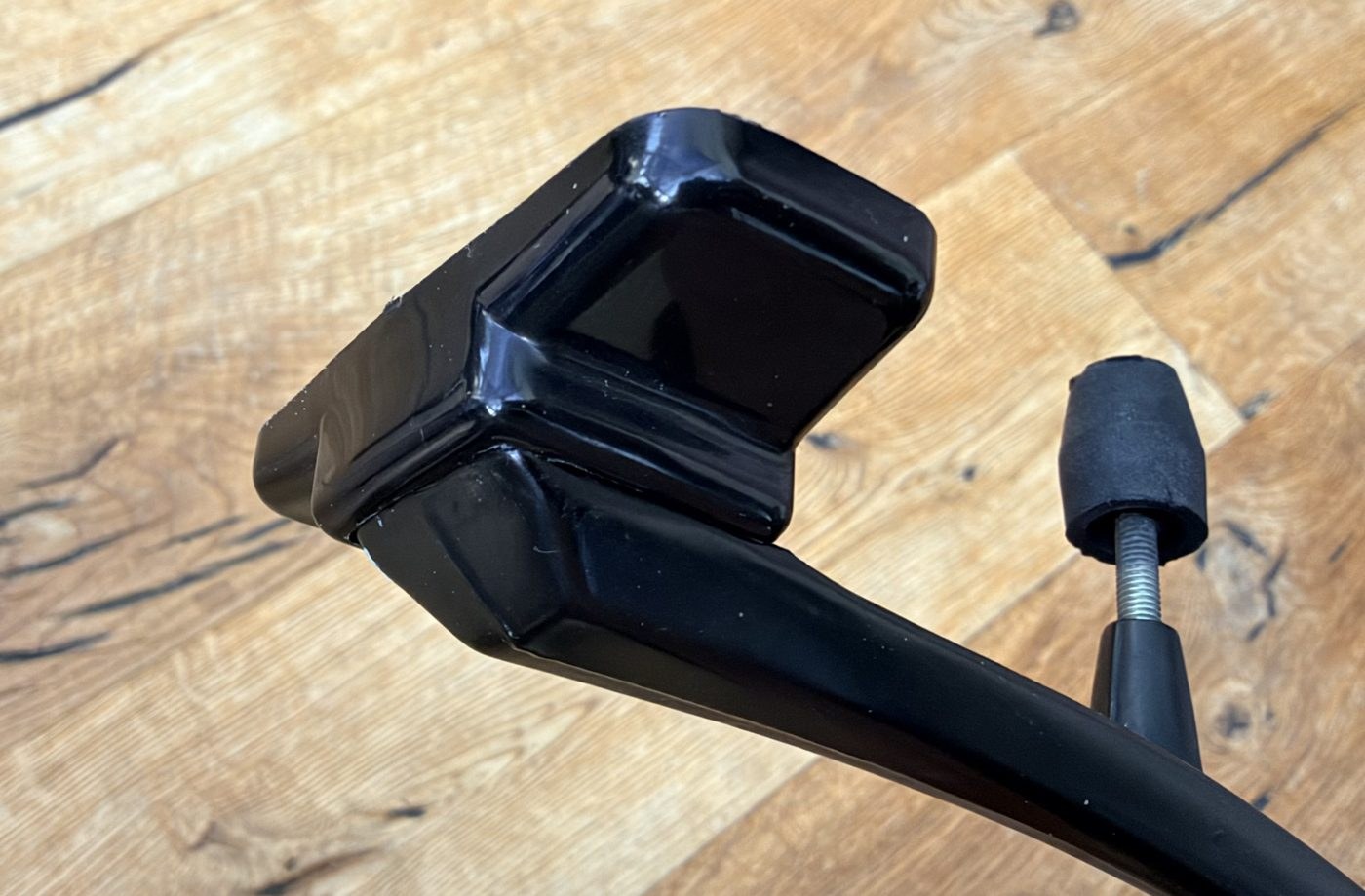
The first test print was a fraction of a millimetre too long for the cover, whose walls lean slightly inwards. We adjusted the model and reprinted until the cover pressed fully home.
A durable replacement in modern engineering plastic that fits the car’s original cover and mirror arm exactly as the factory part did. Because the part now exists as a precise digital model, another can be produced on demand without starting again.
The full two-page case study, with more photos and detail.
Obsolete isn’t the end.
Send us a few photos of the part and tell us which vehicle it’s from. We’ll tell you what’s possible.